Your ocean work matters. Do people know about it?
Too much important ocean science, policy, and innovation never reaches the people who need it most. Instead, it is lost in jargon, buried in reports, or shared without strategy.
That's where the right communications support makes all the difference.
Ocean Oculus is an ocean-focused communications studio helping organisations, researchers, NGOs, and project teams share marine science, sustainability, and innovation in ways people can actually understand and use.
Founded by Dr Sam Andrews, who brings over a decade of experience across research and science communication, Ocean Oculus combines subject-matter understanding and strategic thinking to help your work reach the right people.
What do you need?
-
A focused strategy makes everything else work harder. For ocean organisations, research projects, and teams that want their communication to be purposeful, consistent, and built around real outcomes.
-
Turning complex marine science, data, and technical information into clear, accurate materials that people can actually use. For researchers, projects, and organisations whose work needs to reach beyond specialist audiences.
-
Long-form articles, case studies, newsletters, visuals, web copy, and more – all created with scientific accuracy and consideration for your target audience. For teams that need quality content without the time to produce it themselves.
-
A clear, well-structured digital presence that tells people who you are and what you do. For ocean organisations and projects that need to be found and understood online.
-
Communications that keep participants informed, engaged, and connected, before, during, and after your event. For conferences, workshops, and ocean science gatherings of any scale
-
Practical workshops that build real confidence in communicating science to different audiences. For research teams, institutions, and ocean organisations who want to strengthen their own communication capability.
-
No problem. Many of the best projects start with a conversation. Get in touch and we'll work it out together
Selected Work
From research programmes to training workshops, a selection of projects and work spanning ocean science, policy, innovation, and engagement.
EU4OceanObs
A Horizon Europe project coordinating European ocean observing activities in support of ocean health, biodiversity, climate, and the blue economy. Providing communications support to help a complex, multi-partner initiative share its work clearly across scientific, policy, and ocean community audiences.
FloodMind
Communications workpackage lead for a UK research initiative exploring the mental health impacts of groundwater flooding, translating complex evidence for policy, funding, and community audiences.
Seabed 2030
Long-term communications support for one of the ocean world's most ambitious mapping initiatives, creating content that connects cutting-edge science with the people who need to understand and act on it.
Workshop: The Art of Science Communication
Designing and delivering a workshop helping researchers communicate their work with greater confidence, clarity, and impact — built around the specific challenges of communicating marine and ocean science.
From the Communication Brief
Thoughts, research, and perspectives on communications for the ocean world.

What chronological rather than algorithm-driven social media feeds means for ocean communication.
From sharing research breakthroughs to building networks and engaging the public, social media has become an essential tool for marine researchers. But two new reports reveal a fundamental shift happening beneath the surface.
Can generative AI models like ChatGPT write research summaries that laypeople, aka people without specialised research knowledge, can understand?
“Hey Sam, what should we do about X?”
It’s a question my clients (and those who aren’t) are asking me more and more.
In case you aren’t aware, X (or Twitter, as some prefer to call it still) has undergone significant changes since it was purchased by Elon Musk in 2022. Some have already found these changes unpalatable and have chosen to quit X. Others are seriously considering whether it is worth sticking around.
This is a big question, and the decision about whether to stay or go will depend on a variety of factors: your goals, your audience, and your values, to name just a few.
This is some really great news from a team of deaf scientists, deaf educators, and sign linguists at the University of Edinburgh. They’ve completed a project developing 400 environmental science signs for British Sign Language (BSL).
Are you familiar with Pint of Science? Science Cafe? Science on Tap?
Whatever you call them, the idea is simple - bring together a group of people in a pub, bar, cafe, or other location to hear about research from researchers while enjoying their favourite beverage. If research from Margaux Barrett and fellow researchers at Villanova University in the USA is anything to go by, event attendees are learning quite a bit.
Can scientists express their genuine fears and emotions about the climate crisis, the decline and destruction of nature, and the impacts on people and still be seen as credible, objective experts?
In mid-October 2024, South Africa welcomed the International Marine Conservation Congress (IMCC7). There were over 600 speakers from around the world discussing all things marine. Here’s a round-up of a few of my favourite communication talks.
Good environmental protection is underpinned by sound science. When public trust in science is down and misinformation rife, people may be less likely to support protective measures.
Ocean observations - collecting information about the ocean, like on temperature, or sea ice, or different plants and animals - is so important for understanding our ocean, predicting what might happen in the future, making sure that whatever we do won’t cause too much damage, and keeping people safe at sea (and along the coast)…
When Hakai Magazine announced that it is ceasing at the end of this year a few weeks ago, readers around the world expressed their shock and sadness across social media.
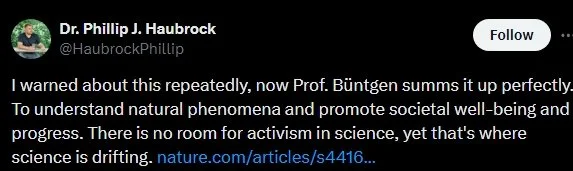
“I am concerned by climate scientists becoming climate activists, because scholars should not have a priori interests in the outcome of their studies.” That’s what Ulf Büntgen (University of Cambridge) wrote in a comment piece for npj Climate Action.
There’s a “hot” new movie on Netflix that has got a few people hot and bothered. Sous la Seine, AKA Under Paris. Because the film features sharks, it has drawn the attention of some irked by the lack of scientific rigour.
Short scientist biographies can help build trust in science, but only if they show why the scientists do what they do.
Journalists reporting for USA-based publications are less likely to include minority-ethic author names in their science reporting.
Creating video abstracts and plain language abstracts is extra work, but they can help boost comprehension, perceived understanding, and enjoyment.
Want to drive some support for climate policy? You might want to get your audience a little emotional.
Being polite and making well-reasoned arguments might help people feel more informed, but it won’t necessarily change their support for policies
When covering research, sometimes the media will provide a link to the original research, sometimes they don’t. Why is that?
The Sagan Effect is named after Carl Sagan, an American astronomer who, over the years, became quite prolific in the science communications space about, well...space back in the 1960s until his death in 1996. But how does it relate to science communication?
There are a lot of tips and techniques for communicating science outside of..um…science. One of my favourites is an oldie but a goody - the inverted pyramid.
Founded by Christine and Margaret Wertheim, the Crochet Coral Reef project is “an ever-evolving nature-culture hybrid…that resides at the nexus of craft, science, mathematics, community engagement, climate change, & feminist art practice.”
Research suggests "a small, yet significant, mix of ideologically aligned partisan actors are fuelling the ‘denial machine’ in Australia," and they’re targeting coral reef science
In universities, who is actually doing science communication? If a recently published study from Marta Entradas (ISCTE - Instituto Universitário de Lisboa) and colleagues is anything to go by, it's not central university communication offices.
How can we improve knowledge exchange between researchers and decision-makers? Perhaps the Australian National Environmental Science Program Marine Biodiversity Hub is a good place to look for answers.
Should researchers and science communicators share personal information, thoughts, ideas, online or should they only talk about the science?
Species on the move can create an opportunity to connect people with nature and climate change, and, hopefully, help prompt positive action.
When Elon Musk took over Twitter back in 2022, lots of people were unhappy. Some moved over to other platforms, like Mastodon. What prompted some communities to make the move?
Research from Josephine Martell and Amanda Rodewald suggests pessimistic messaging has its place in motivating conservation behaviours.
From the Ocean Brief
Short ocean stories and insights covering science, policy, innovation, and the ocean community
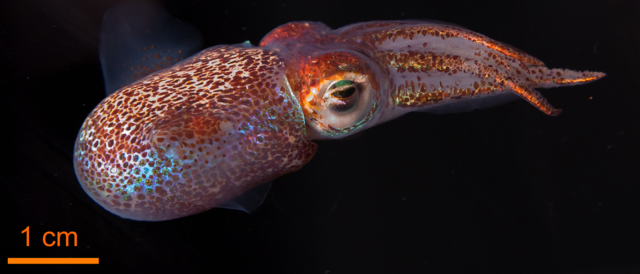
A recent science expedition along Argentina’s continental shelf has been a reminder of just how much of the ocean life there is to be discovered.
New study demonstrated the economic damage sargassum causes to Puerto Rico, the US Virgin Islands, and Florida’s Atlantic coast
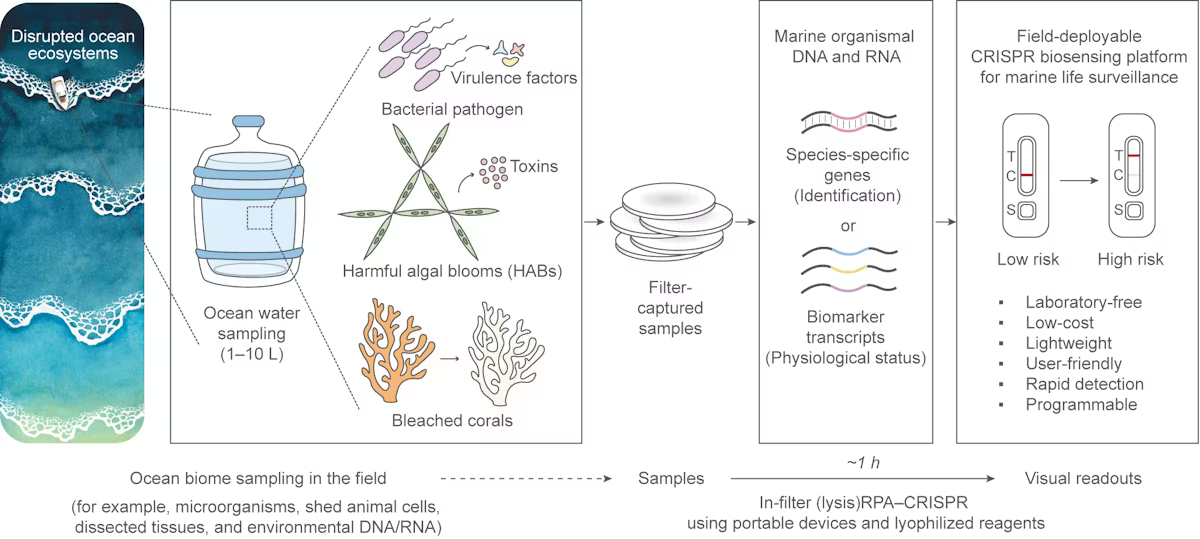
Our oceans are under intense pressure from warming waters, pollution, and habitat loss, but new tools are emerging that could improve how we monitor the state of the ocean.
Researchers from MARUM – Center for Marine Environmental Sciences, University of Bremen, were surprised to discover a large field of hydrothermal vents near Milos Island, Greece.
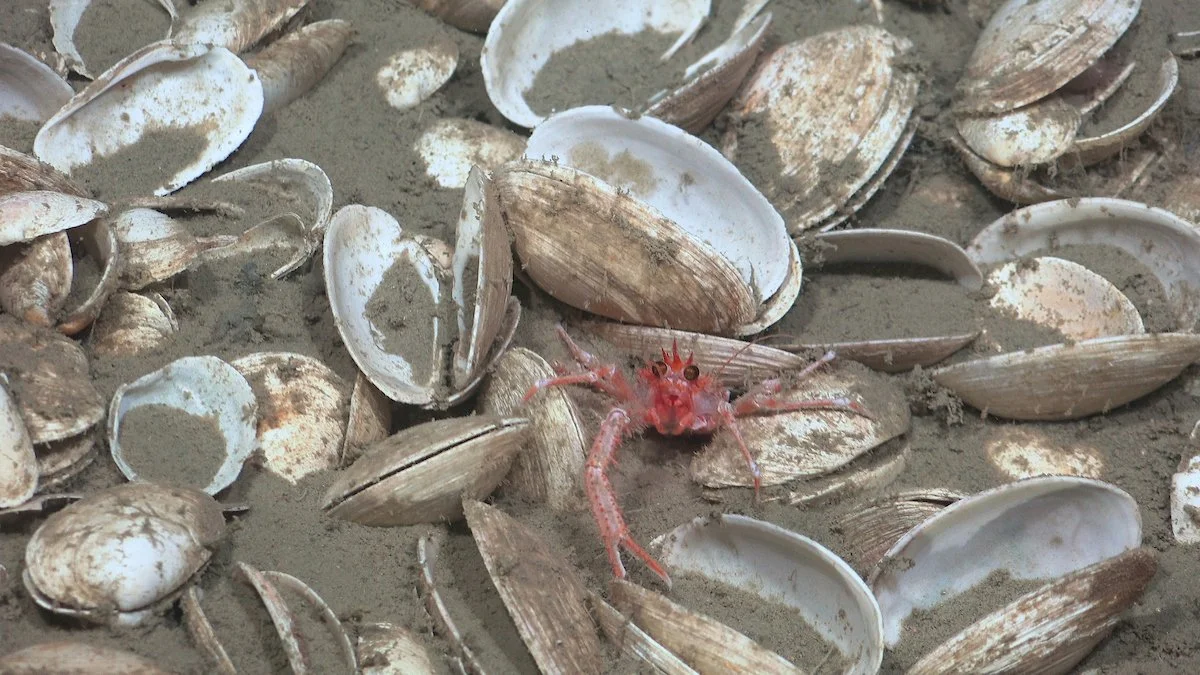
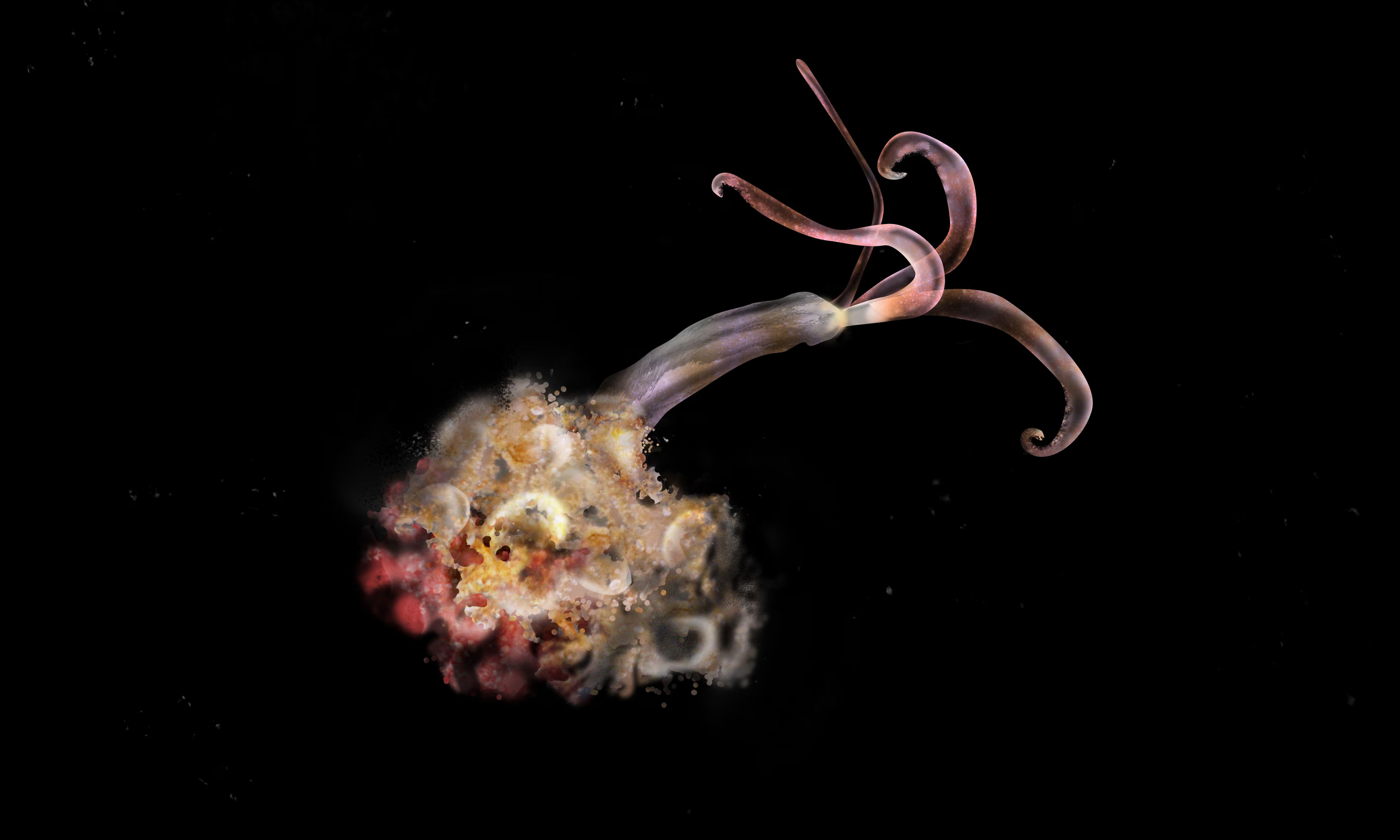
Scientists studying the deep sea off the west coast of Canada have made a worrying discovery: zombie worms are missing.
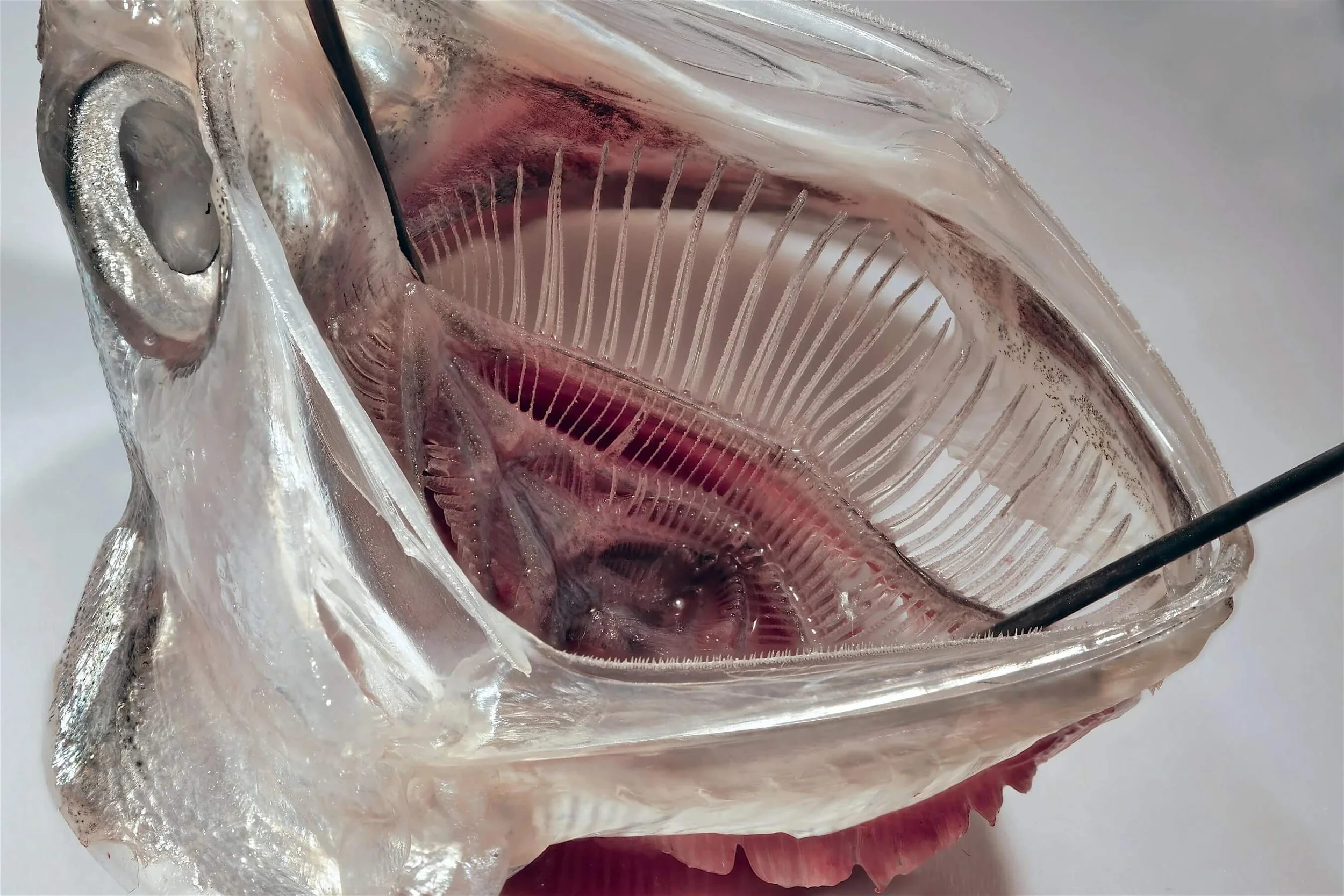
Researchers at the University of Bonn have developed a new washing machine filter inspired by fish gills, and early tests suggest it could remove more than 99 percent of microplastic fibres from laundry wastewater.
In this month’s Ocean Brief, I share my reflections on UNOC and the One Ocean Science Congress - something I've been meaning to do since June.
Ok, a confession. As far as I know, there are no awards for jellyfish, but if there were, these fabulous six would certainly meet the grade
Artificial nests can boost the breeding success of endangered African penguins, but different designs are more effective at different colonies
What’s geodiversity you ask? It’s short for geological diversity - the diversity of the natural parts of our planet that aren’t alive. The rocks, soils, sediments, landforms, and hydrological features, for example, and the processes that create and change these and other non-living features. Geodiversity isn’t just the stuff we see on the land. It’s underwater too. Let’s take a peek at just five spectacular undersea features that make up some of our World’s geodiversity.
Community science project Competitive Angling as a Scientific Tool (CAST) could provide a unique insight into the distribution, life stages and habitat preferences of data-poor fisheries.
62% of Marine Protected Areas (MPAs) designated to protect rare migratory fish species are outside of their core habitats, according to a new modelling study.
It’s World Bee Day! Bees are famous for their pollination, but did you know that there are many other pollinators? Some even live in the sea.
Palaeontologists believe the teeth may have been used for defence, competitive fighting, or as digging tools
Scientists have shown for the first time that juvenile great white sharks gather in nearshore waters up to 10 meters deep with temperatures between 16 and 22 °C – a very different habitat from that of adults. These preferences may optimize their growth and minimize the risk of predation. These results can inform conservation efforts and help avoid unwanted encounters with swimmers.
A new report released at the Our Ocean Conference in Greece by SkyTruth, a nonprofit conservation technology organization, identified 757 oil slicks covering 1.9 million hectares in the Mediterranean Sea between July 2020 - January 2024. Most of these slicks were discharged from vessels in transit.
This World Penguin Day we take a look at the Galapagos Penguin - arguably the loneliest penguins in the world.