Fishy filter could reduce microplastics
Researchers at the University of Bonn have developed a new washing machine filter inspired by fish gills, and early tests suggest it could remove more than 99 percent of microplastic fibres from laundry wastewater.
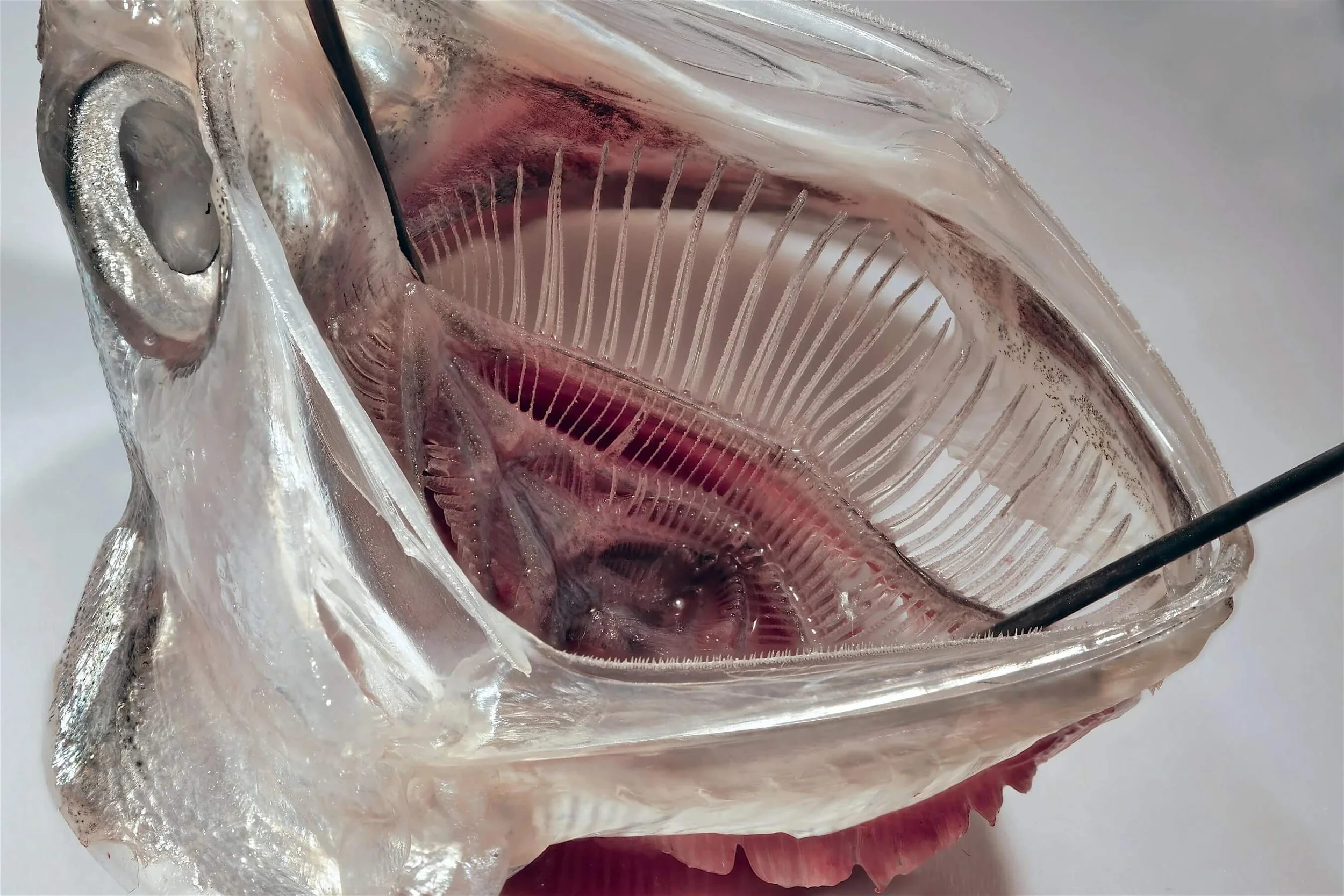
Inside an anchovy’s mouth. Plankton particles are captured by the gill system. Credit Jens Hamann
Microplastics are tiny pieces of plastic that can be released when clothes are washed, as fibres slowly wear away. A single washing machine in a four-person household can produce hundreds of grams of these fibres every year. Many end up in sewage sludge, which is often spread on farmland, allowing plastics to enter soils, rivers, and even the ocean.
Existing filters often clog or miss the smallest fibres, so the team looked to nature for a better solution. Some fish, such as sardines and anchovies, are expert filter feeders. They strain food from water using a gill arch system that guides particles along a funnel-shaped surface, rather than trapping them head-on.
The researchers copied this idea, creating a filter that steers fibres along its surface instead of blocking them. This helps prevent clogs while still capturing almost all microplastics. The trapped fibres are collected, compressed into a small pellet, which can be removed after several washes and thrown out.
Why it matters
Microplastics can release chemicals and soak up pollutants from the environment. When animals eat them, those pollutants and chemicals may cause all sorts of problems, like impacting growth, health, and ability to have offspring.
Microplastics also move through the food web. When a small fish eats microplastics, and then a larger fish eats that smaller fish, the microplastics and their pollutants can accumulate at each level. This process, called biomagnification, means that predators at the top of the food chain - including humans who eat seafood - may end up with higher concentrations of these pollutants in their bodies.
Read the paper A self-cleaning, bio-inspired high retention filter for a major entry path of microplastics (open access)