Curious case of the missing zombies
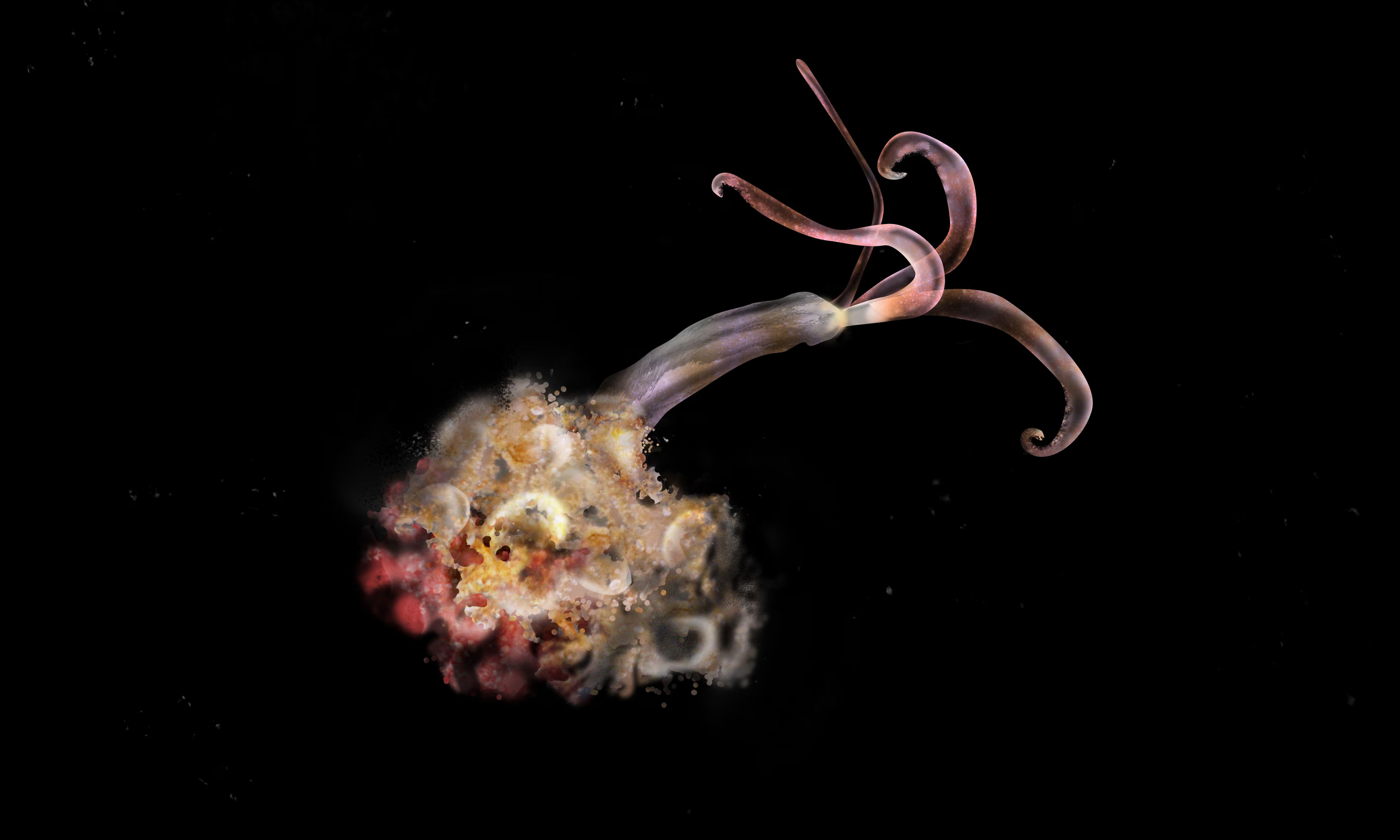
The zombie worm, Osedax. Credit: Adisha Pramod/Alamy
Scientists studying the deep sea off the west coast of Canada have made a worrying discovery: zombie worms are missing.
Known as “bone devourers,” Osedax worms usually play a key role in breaking down whale bones on the seafloor. But in a decade-long observation study led by Fabio De Leo from Ocean Networks Canada, researchers found no sign of them at all.
The team placed humpback whale bones some 1,000 metres down in Barkley Canyon in the Pacific and monitored them for over ten years using underwater cameras. Barkley Canyon is used by humpback and grey whales in the annual migrations, so the canyon is no stranger to “whale falls” - when whales die, and their bodies sink to the sea floor. In the deep sea, these whale falls can support entire communities.
Normally, zombie worms quickly move in to feast on bones. They don’t have mouths or stomachs, but instead grow root-like structures into bone. These roots contain lots of microbes that extract nutrients from the bones.
Researchers think low oxygen levels, linked to ocean warming, may be the cause. If oxygen-poor zones continue to expand, we could see more of these little worms disappear.
Why it matters:
Zombie worms are ecosystem engineers. By breaking down bones, they release nutrients that other species can use. Losing zombie worms could mean less food for other species, and potentially the loss of whale fall communities.
Read the paper High-frequency study of megafaunal communities on whale bone, wood and carbonate in hypoxic Barkley Canyon (open access)