The devastation of a Tsunami
For coastal communities, few things are more frightening than a Tsunami. Caused by earthquakes, landslides, volcanic eruptions, and other large disturbances in the water, tsunamis are a series of waves generated by the rapid displacement of huge volumes of water. In deep water, the waves can travel over 700 kilometres per hour. Here the distance between two wave peaks (the ‘wave length’) can be large - up to 500 kilometres! Their deep water height (the waves’ ‘amplitude’) might surprise you too… often they are short enough to be undetectable to ships who are in their path. How short? Some can reach just 50 centimetres.
The trouble comes when they move closer to shore, where the water gets shallower. The Tsunami’s speed is relative to water depth. Essentially, the deeper the water, the faster the wave. So in shallow water, the wave slows down. Which sounds like a good thing! But there’s a problem… all that energy in the wave has to go somewhere, and it goes into building height. In extreme cases, this ‘shoaling’ can result in waves 40, even 50 meters in height! The taller the wave, the farther it can travel inland.
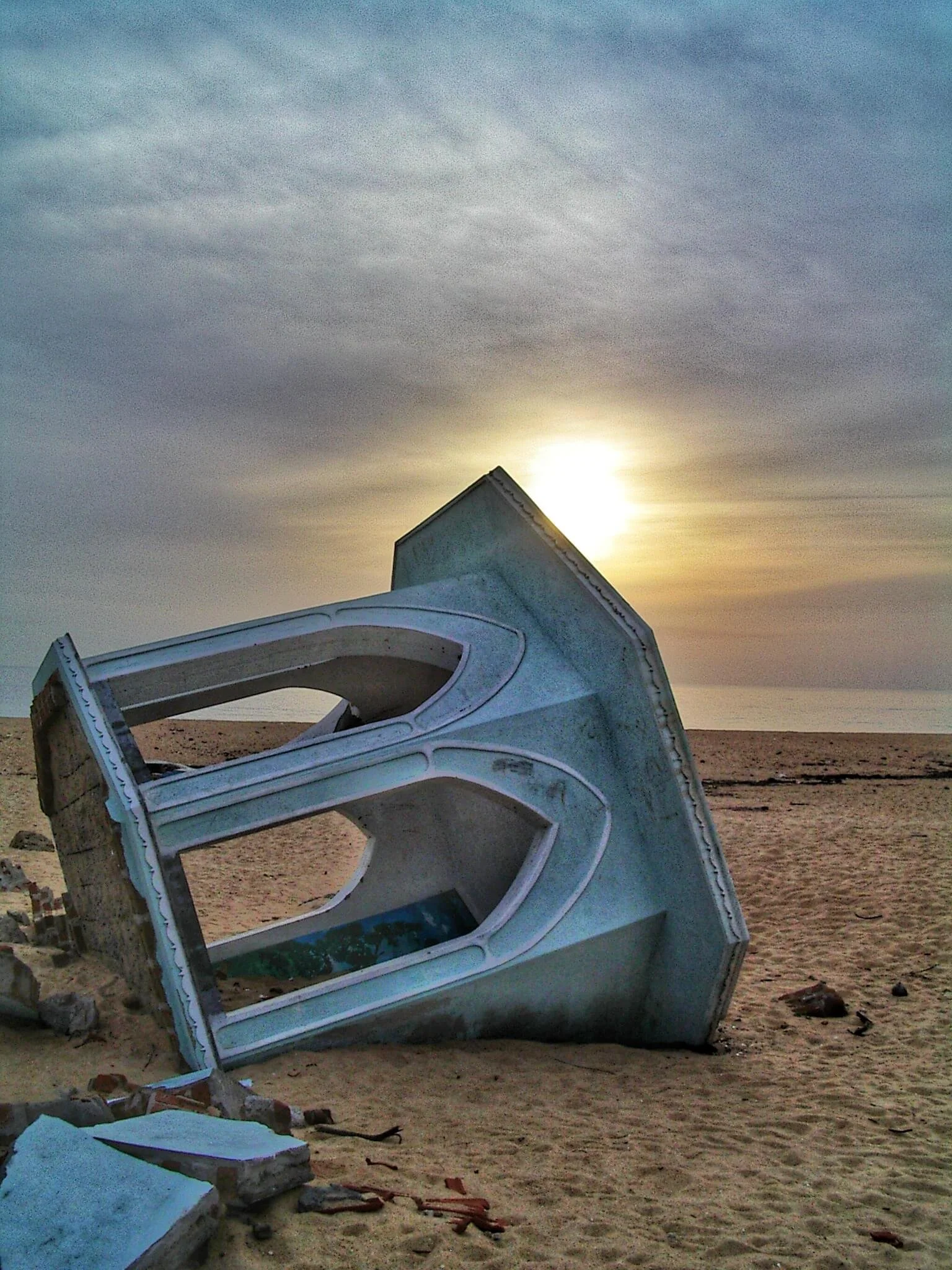
Almost six months after the Tsunami hit Sri Lanka, the destruction wrought on Batticaloa was still evident. Credit: Samantha Andrews/Ocean Oculus
On average, we can expect to see two tsunamis per year somewhere on our planet, though mostly in the Pacific Ocean. In more recent times, the most devastating Tsunami struck in the Indian Ocean
On December 25, 2004, a huge earthquake measuring 9.1 on the Richter scale struck some 160 kilometres off the coast of northern Sumatra, Indonesia. The seabed rose by several meters, and the resulting tsunamis - widely known collectively as the ‘Boxing Day tsunamis’ - were born. Indonesia suffered the worst damage, but the tsunamis also made their way to Thailand (500 kilometres away from the centre of the earthquake), Sri Lanka (1,700 kilometres away from the centre of the earthquake), and India (over 2,000 kilometres away), to name a few.
Some 230,000 people in fourteen different countries died as a result of the tsunamis, and millions more were left homeless. Over a decade later, much of the physical devastation can no longer be seen, but the psychological scars may never completely heal.